7 Tips for Eco-Friendly Dumpster Rentals
- Gregory Cunningham
- May 20, 2025
- 12 min read
Updated: Sep 1, 2025
Managing waste responsibly is more important than ever. Opting for eco-friendly dumpster rentals can help reduce landfill waste, cut emissions, and promote recycling. Here’s a quick summary of how to make your dumpster rental greener:
- Choose the Right Size: Avoid oversized dumpsters to minimize trips and save energy.
- Sort Waste by Type: Separate recyclables like paper, metal, and glass to improve recovery rates.
- Partner with Green Companies: Work with waste services that prioritize recycling and legal compliance.
- Plan Pickups Smartly: Schedule pickups during off-peak hours and combine loads to save fuel.
- Know What Not to Throw: Keep hazardous items like batteries and paint out of dumpsters.
- Reduce Waste Beforehand: Donate reusable items and plan low-waste projects.
- Track Your Waste: Monitor what you throw away to find ways to recycle more and waste less.
Fast & Affordable Dumpster Rentals & Junk Hauling!
1. Pick the Best Dumpster Size
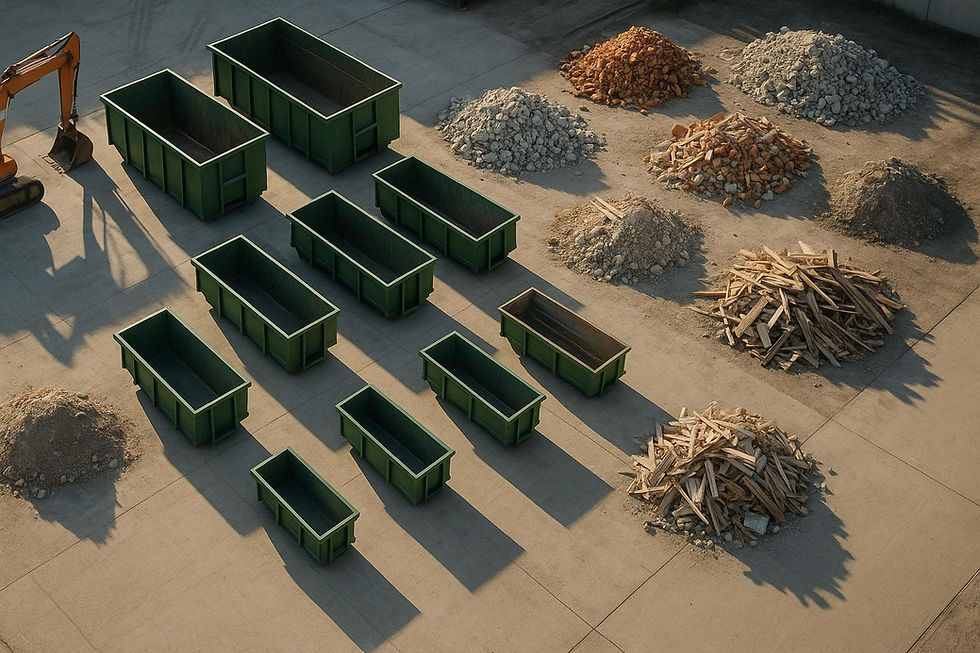
Choosing the right dumpster size is key to saving money and reducing environmental impact. By matching the dumpster to your project's needs, you can minimize unnecessary trips and conserve energy. Start by estimating your waste volume to figure out the size that works best.
Calculate Your Waste Volume
Accurately estimating your waste volume is essential. For reference, one cubic yard can hold about three standard trash bags.
Project Type | Recommended Size | Equivalent Capacity |
Small Garage Cleanout | 10-yard | 4 pickup truck loads |
Bathroom Remodel | 10–20 yard | 4–8 pickup truck loads |
Whole-House Cleanout | 20-yard | 8 pickup truck loads |
If your project involves heavy materials like concrete, you may need a smaller container to handle the weight. On the other hand, large or bulky items often require a bigger dumpster. Also, keep in mind that longer projects tend to produce more waste over time.
Load Your Dumpster Efficiently
After selecting the right dumpster size, focus on loading it efficiently. Smart loading not only prevents overflow but can also cut down on trips and emissions. In fact, businesses that load strategically have been shown to reduce waste costs and their environmental impact by 25%.
Here are some tips for efficient loading:
- Place heavy items at the bottom and break down bulky materials.
- Distribute weight evenly by stacking items carefully and reaching higher areas.
- Pre-sort materials to improve recycling rates by up to 30%.
2. Organize Waste by Type
Sorting waste effectively plays a key role in supporting environmentally friendly dumpster practices. It not only boosts recycling efforts but also helps reduce the amount of trash sent to landfills. Considering that the average American generated nearly 5 pounds of waste per day in 2018, proper waste organization can make a big difference.
Group Similar Materials Together
Setting up specific areas to sort different types of waste makes recycling more efficient and increases the likelihood of recovering usable materials. You can organize waste into categories like these:
Material Type | Common Items | Special Handling Notes |
Paper/Cardboard | Boxes, newspapers, mail | Flatten boxes and keep them dry |
Metal | Cans, pipes, fixtures | Rinse thoroughly to remove residue |
Plastic | Containers, packaging | Check for recycling numbers |
Wood | Lumber, furniture parts | Remove any metal hardware |
Glass | Bottles, windows | Wrap sharp edges to prevent injury |
For items made of multiple materials, disassemble them to separate recyclable components. This small step can significantly increase recovery rates. For example, in 2018, Americans recycled approximately 68% of the paper they used. Once sorted, labeling containers clearly will help ensure everything ends up in the right place.
"Separating waste is important for diverting materials away from landfills and into recycling processing centers." - RT Opdenaker
Mark Waste Containers Clearly
Proper labeling of waste containers is essential for accurate sorting and reducing contamination. According to research by The Recycling Partnership, clear and consistent labeling encourages better recycling habits. To make labels effective:
- Use both text and images to clarify what belongs in each container.
- Stick to a consistent color-coding system for all waste categories.
- Position labels at eye level for easy visibility.
- Keep instructions short and straightforward.
Advancements like the 2024 Olympus Ballistic Separator, recently added at Eco360 in Moncton, New Brunswick, have further improved the efficiency of single-stream recycling systems. By combining these efforts with clear labeling, we can make recycling easier and more effective.
3. Work with Green Waste Companies
Taking your waste management efforts a step further, collaborating with green waste companies can make a notable difference in reducing your ecological impact.
Choosing waste companies that prioritize eco-friendly practices helps cut down on landfill waste while ensuring compliance with strict environmental regulations.
Check Recycling Programs
Partnering with waste companies that emphasize recycling can significantly improve sustainability efforts. For instance, in Massachusetts, effective recycling initiatives have prevented over 3,300 tons of methane emissions annually. That’s comparable to taking nearly 20,000 gasoline-powered cars off the road.
When assessing recycling programs, keep an eye on these critical aspects:
Program Feature | Key Details | Why It Matters |
Facility Partnerships | Collaborations with certified recycling centers | Ensures materials are processed correctly |
Sorting Practices | Advanced waste segregation systems | Maximizes recovery of reusable materials |
Program Tracking | Regular updates on recycling performance | Helps monitor environmental contributions |
Staff Training | Thorough protocols for waste handling | Guarantees proper management of materials |
Confirm Legal Compliance
Working with a waste company that adheres to legal standards is essential for protecting both the environment and your business. A notable example: in 2016, Waste Management of Delaware faced a $44,000 fine for improperly mixing recyclables with trash and failing to provide adequate recycling bins for residents.
To ensure you're partnering with a compliant waste service provider:
- Verify CertificationsCheck for approvals from your state's Department of Environmental Protection. Look for additional certifications like LEED or TRUE Zero Waste, which reflect a commitment to sustainable practices.
- Review Environmental PracticesDive into the company's policies on waste management, particularly their handling of hazardous and electronic waste.
Legal compliance isn’t just about avoiding fines - it’s a key part of environmental responsibility. For example, in 2022, a major retailer paid $7.5 million to settle a lawsuit in California over improper hazardous waste disposal. By choosing a waste company that prioritizes compliance, you safeguard your business while minimizing environmental harm. Companies like Dump & Go focus on eco-friendly solutions and adhere to strict state regulations, ensuring your waste management efforts align with sustainability goals.
Partnering with green waste companies isn’t just about meeting legal standards; it’s a step toward meaningful environmental progress, helping your projects make a lasting positive impact.
4. Plan Smart Pickup Times
Carefully planning dumpster pickups can save fuel, cut emissions, and make operations run more smoothly.
Choose Off-Peak Hours
Scheduling waste pickups during off-peak hours helps trucks idle less and operate more efficiently, which improves fuel usage.
Here’s a breakdown to consider when setting pickup times:
Time Period | Benefits | Environmental Impact |
Early Morning (4–7 AM) | Minimal traffic congestion | Lower idle emissions |
Mid-afternoon (1–3 PM) | Reduced road activity | Improved fuel efficiency |
Evening (7–9 PM) | Quicker route completion | Smaller carbon footprint |
Since waste collection can account for 50% to 70% of total waste management costs, pairing smart timing with efficient load management can significantly improve sustainability.
Combine Waste Loads
Merging waste loads into fewer trips is a straightforward way to cut down on environmental impact. In urban areas, solid waste collection contributes to 10–15% of total freight transport, making load optimization a key strategy.
Take the City of Kansas City as an example. They introduced a coordinated bulk pickup system through their website, handling over 60,000 pickups more effectively. This reduced unnecessary trips and saved fuel.
Here’s how you can optimize waste loads:
- Plan Ahead: Work with your waste management provider to set a schedule that allows for full load pickups.
- Strategic Loading: Place heavier items at the bottom and break down bulky materials to use space efficiently.
- Monitor Fill Levels: Keep an eye on dumpster levels to avoid overflow and eliminate extra trips.
Using advanced scheduling systems can further streamline pickups and remove inefficiencies. Collaborate with your waste management provider to explore scheduling options that align with your project needs while benefiting the environment.
5. Know What Not to Throw Away
Beyond sorting waste effectively, it’s equally important to know what items should never end up in a dumpster. Properly managing these materials helps reduce environmental harm and keeps hazardous waste out of landfills.
Common Banned Items
In 2017, the United States produced 267 million pounds of municipal solid waste. Many states have specific rules about what can and cannot go into dumpsters, and violating these regulations can lead to fines or environmental damage.
Here are some commonly banned items:
Category | Examples | Why They’re Banned |
Hazardous | Paint, chemicals, pesticides | Pose risks of environmental contamination |
Electronic | TVs, computers, phones | Contain toxic substances like lead and mercury |
Automotive | Oil, antifreeze | Require specialized recycling processes |
Household | Batteries, fluorescent bulbs | Contain harmful chemicals like mercury |
Construction | Asbestos, treated wood | Present health and safety hazards |
Certain states, including California, Maine, and Vermont, have laws mandating the recycling of items like fluorescent lightbulbs. Once you identify these restricted materials, it’s crucial to handle them properly to avoid environmental risks.
Handle Dangerous Materials Safely
Disposing of hazardous waste responsibly is essential for safeguarding both public health and the environment. Many communities provide programs specifically designed for household hazardous waste (HHW).
"When in doubt, consult your local waste authority to avoid extra fees or risks."
Here are some tips for safely managing hazardous materials:
- Find local hazardous waste collection programs through your environmental agency.
- Contact your local environmental authority to locate HHW collection sites.
- Never mix different hazardous products, as this can create dangerous reactions.
For example, Oklahoma City’s Household Hazardous Waste Collection Center accepts items like antifreeze and pesticides from surrounding areas, including Edmond and Moore. However, some municipalities may charge fees for these services.
If local collection programs aren’t available, consider these disposal alternatives:
- Use PaintCare drop-off sites for leftover paint.
- Recycle electronics through certified e-waste recyclers.
- Take automotive fluids to local auto parts stores.
- Drop off used batteries at retailer-sponsored recycling programs.
Even empty containers that once held hazardous materials can still pose risks. If you’re unsure how to dispose of something, always reach out to your local waste management authority for guidance.
6. Cut Waste Before You Start
Reducing waste at the beginning of any project can save money and help protect the planet. By focusing on waste reduction upfront, you not only lower disposal costs but also lessen your environmental footprint.
Give Away Good Items
Before you toss something into the dumpster, think about whether it could be useful to someone else. Many organizations welcome donations of items that are still in good condition, helping both people in need and the environment.
"When you have usable items that are in clean, working condition, the most responsible way to get rid of them is to donate them."
- Hometown Dumpster Rental
Here’s a quick guide to donating:
Item Category | Potential Recipients | Preparation Requirements |
Furniture | Habitat ReStore, Salvation Army | Clean and repair minor damage |
Electronics | Local libraries, Goodwill | Ensure they are in working order |
Clothing | Dress for Success, Baby2Baby | Wash, fold, and sort by size |
Kitchen Items | Food banks, shelters | Clean thoroughly |
Books | Libraries, schools | Check for damage |
To make your donations as effective as possible:
- Take inventory of what you’re donating and estimate the volume.
- Research local charities that align with your goals and values.
- Clean and repair items to ensure they’re ready for use.
- Group similar items together and label them clearly.
- Double-check donation guidelines before dropping items off.
Once you’ve handled donations, focus on designing your project to create as little waste as possible.
Design Low-Waste Projects
Thoughtful planning is key to reducing waste and keeping materials out of landfills. According to the US EPA, preventing waste at the source is one of the best ways to save money and reduce environmental harm.
"Effective planning is beneficial for minimizing waste in construction projects. A well-thought-out plan considers every aspect of the project, from the initial design to the final execution. By identifying potential waste sources early, construction professionals can implement strategies to reduce or eliminate them."
- Handy Can Dumpsters
Here are some strategies to minimize waste during renovation or cleanup projects:
- Use software tools to calculate material needs with precision.
- Opt for sustainable building materials.
- Incorporate modular designs that use fewer resources.
- Plan for recycling or reusing materials instead of discarding them.
For example, the Sable energy project in Canada recycled an impressive 99% of materials during its platform removal process (Source: ExxonMobil Sustainability, 2025).
For everyday household waste reduction:
- Plan meals in advance to buy only what you need.
- Set your printer to default double-sided printing to save paper.
7. Keep Track of Your Waste
Monitoring your waste is a practical step toward making environmentally conscious dumpster rental choices. By keeping tabs on what you throw away, you can uncover areas for improvement, enhance recycling efforts, and build on early waste reduction strategies.
Measure Your Waste
Taking a systematic approach to measuring waste can uncover opportunities to improve processes and reduce waste.
"Technology-enabled tracking improves accuracy and efficiency of data collection, leading to better insights and quicker turnaround…[it] informs and optimizes operations, increasing profits, eliminating waste, and forming the business case for investment in other food waste solutions." - ReFED
Here’s a quick guide to understanding waste weight by material type:
Material Type | Weight per Cubic Yard | Typical Usage |
Concrete | 2,370 lbs | Construction debris |
Wood | 400 lbs | Renovation waste |
Cardboard | 100 lbs | Packaging materials |
Gypsum Board | 500 lbs | Interior demolition |
Steps to Measure Waste:
- Gather necessary tools like a scale, labeled containers, and a way to record your findings.
- Conduct a waste audit by sorting materials into categories and weighing each group separately.
- Calculate your diversion rate using this formula:
These measurements can help you set realistic waste reduction goals and track your progress over time.
Make Waste Reduction Goals
Setting clear waste reduction goals is key to making meaningful progress. A structured plan not only benefits the environment but can also save money and promote social responsibility.
"If you can do something to reduce the waste, you're doing the right thing for the environment, you're saving money, and you're doing something socially responsible. It's a win-win-win all the way around." - Tom Thompson, UW Health
Examples of Success in Waste Reduction:
- Barcelona implemented a smart waste management system that cut collection costs by 10% and reduced carbon emissions from waste trucks by 20%.
- Kamikatsu, Japan, achieved an 80% recycling rate by introducing a detailed system with 45 waste categories.
Steps to Set Effective Goals:
- Use the SMART framework (Specific, Measurable, Achievable, Realistic, Time-Bound).
- Establish a baseline measurement of your current waste.
- Regularly monitor your progress and tweak strategies as needed.
For construction or renovation projects, maintaining a waste log can make tracking easier:
Category | Details to Track | Purpose |
Material Type | Wood, metal, concrete | Spot recycling opportunities |
Weight | Pounds/tons | Track volume trends |
Disposal Method | Recycled, reused, landfilled | Measure diversion rates |
Cost | Transportation, disposal fees | Calculate savings |
Conclusion: Making a Difference One Dumpster at a Time
Eco-friendly dumpster rentals play a key role in reducing our environmental footprint. Did you know that landfills in the United States contribute roughly 15% of the nation’s methane emissions? This makes sustainable waste management not just a good idea, but a pressing necessity.
"By responsibly disposing of waste materials through proper channels, individuals and businesses can contribute significantly to protecting biodiversity and diminishing the overall negative impact on the environment." - Newsouth Waste
The benefits of recycling and reuse are not just environmental - they're economic too. In a single year, these activities created 681,000 jobs, generated $37.8 billion in wages, and added $5.5 billion in tax revenue. Every eco-conscious decision in waste management ripples outward, creating both measurable environmental and economic benefits.
Recycling, in particular, has an incredible impact. For instance, recycling just one ton of aluminum cans saves 14,000 kWh of energy - enough to power an average U.S. home for a year and a half. Recycling a ton of paper? That saves 17 trees, 7,000 gallons of water, and 463 gallons of oil.
Key Recycling Benefits |
14,000 kWh of energy saved per ton of aluminum |
7,000 gallons of water saved per ton of paper |
463 gallons of oil saved per ton of paper |
17 trees preserved per ton of paper |
Whether it’s a small home renovation or a larger cleanup project, disciplined waste management makes a difference. Dump & Go leads the way with efficient sorting systems, partnerships with local recycling facilities, and optimized transportation routes to cut down on carbon emissions.
FAQs
What’s the best way to choose the right dumpster size for an eco-friendly project?
Choosing the right dumpster size is crucial for managing waste efficiently and minimizing environmental impact. Start by estimating the volume and type of waste your project will produce. If you choose a dumpster that's too big, you'll end up with wasted space. On the other hand, a dumpster that's too small might mean extra trips, which can increase fuel consumption and emissions. Select a size that matches your waste output and supports proper separation of recyclables from landfill materials.
Need help deciding? Reach out to your dumpster rental provider. They can suggest the best size for your project, helping you manage waste effectively while keeping costs and environmental effects in check.
What are the advantages of choosing eco-friendly dumpster rental services?
Choosing eco-friendly dumpster rental services comes with several advantages that go beyond just waste removal. These companies focus on recycling and responsible disposal, helping to cut down on landfill waste and support greener practices. Their efficient operations and waste sorting also help reduce carbon emissions, making them a smarter choice for the planet.
But the perks don’t stop there. Working with environmentally conscious waste companies can help ensure your project aligns with local environmental laws. Plus, showcasing a commitment to sustainability can boost your reputation - especially in a world where clients and stakeholders are increasingly drawn to eco-friendly initiatives.
What items should never go in a dumpster, and how can I dispose of them responsibly?
Certain items should never be tossed into a dumpster because they can cause harm to the environment or break local waste disposal laws. Hazardous materials - such as batteries, paints, chemicals, and electronics - can leak harmful substances, polluting soil and water. On top of that, disposing of these items improperly could lead to fines or additional fees.
To deal with these restricted items the right way, look into local hazardous waste collection events or recycling centers nearby. Many communities provide convenient drop-off points for things like electronics, chemicals, and other banned materials. These facilities ensure proper handling, keeping everything safe and aligned with environmental regulations. By taking these steps, you’re not just protecting nature - you’re also contributing to a healthier community.


Comments